A No-Nonsense Comparison for Campers, Hunters, and Survivalists
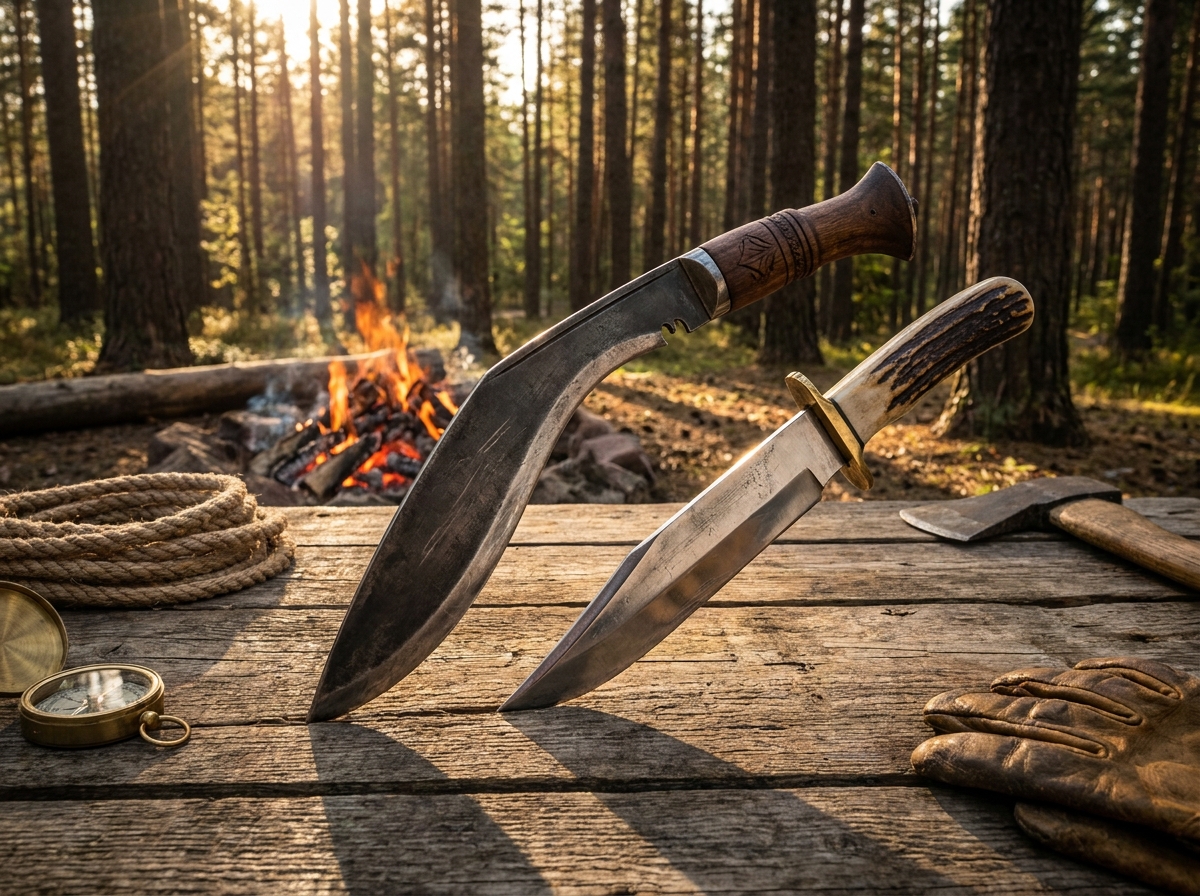
You’re standing at the trailhead with one spot left on your belt — and two knives worth considering. The Kukri, that heavy curved blade from Nepal that Gurkha soldiers have carried into combat for centuries. And the Bowie, the American frontier classic that Jim Bowie made famous in an 1827 Mississippi River duel. Both are legends. But they do very different jobs, and picking the wrong one can leave you struggling when it matters most.
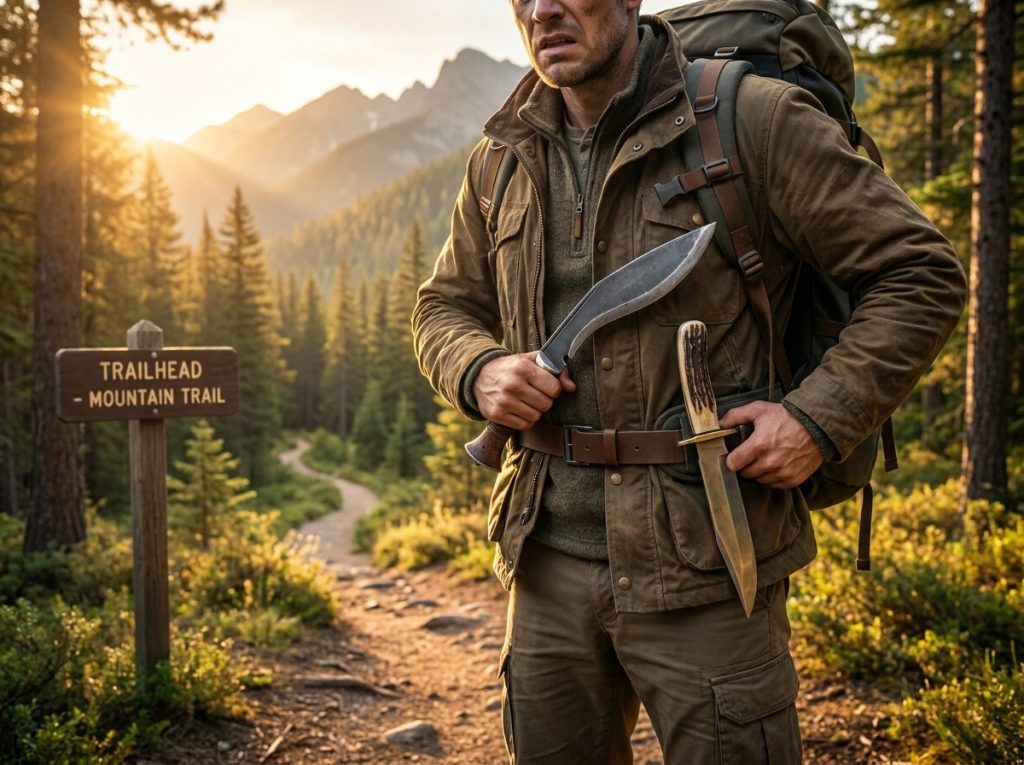
This guide breaks down the real differences — blade design, chopping power, slicing ability, weight, maintenance, and who each knife actually suits. By the end, you’ll know which one belongs on your kit.
What Is a Kukri Knife?
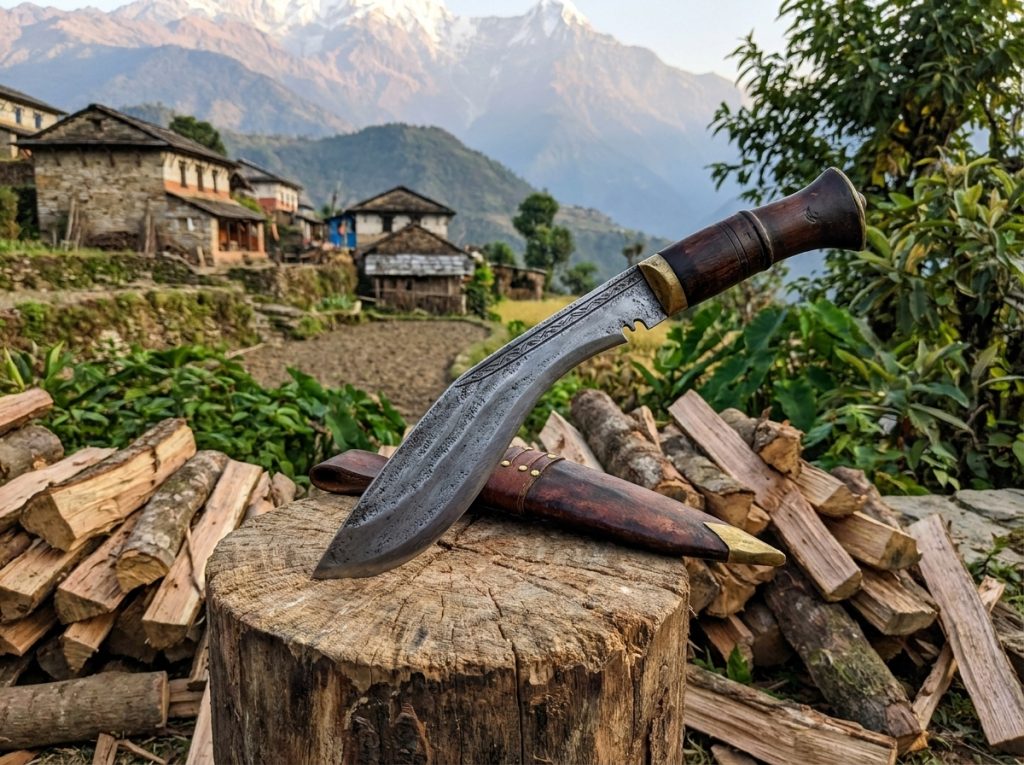
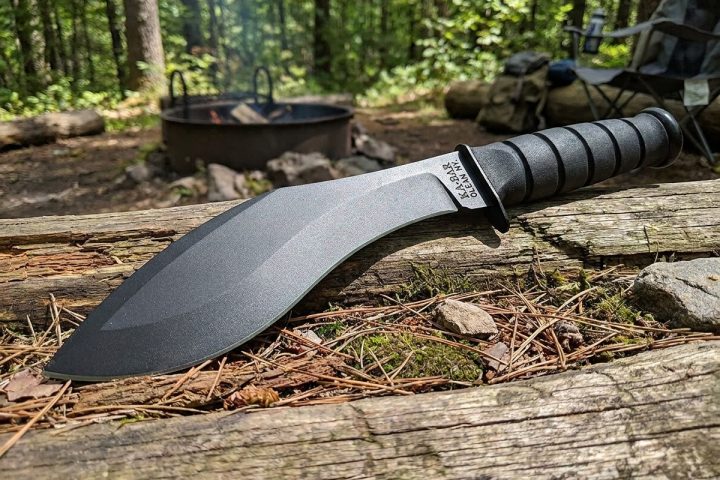
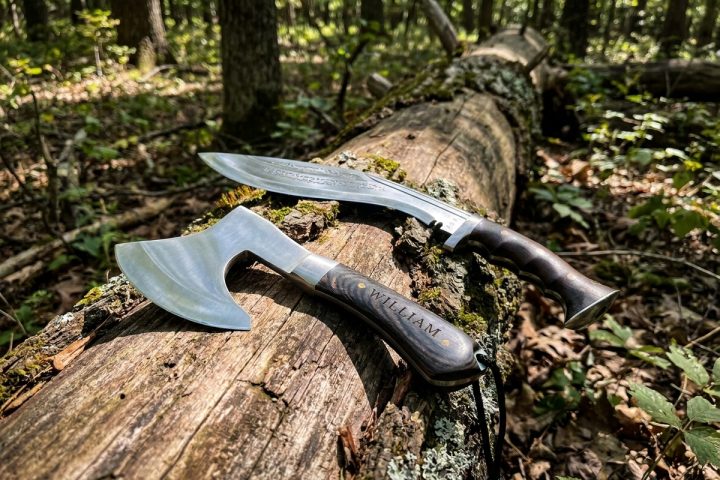
The Kukri (also spelled khukri) is a Nepali utility knife with a distinctive inward-curved blade, heavy toward the tip. It serves as the national weapon of Nepal and remains standard issue for Gurkha regiments to this day. But it’s far more than a military relic — across rural Nepal, people use it to chop firewood, clear brush, skin game, and even cook. It’s the all-in-one outdoor tool that’s been refined over centuries of real-world use.
A Quick History
The Kukri’s origins likely trace back to ancient curved sickles used across the Indian subcontinent. It caught the West’s attention during the Anglo-Nepalese War of 1814–1816, where Gurkha fighters carrying Kukris proved formidable opponents — impressive enough that the British Army began recruiting them shortly after. If you’ve read Bram Stoker’s Dracula (1897), you may recall that both a Kukri and a Bowie knife appear in the final showdown. The two knives have been linked in pop culture ever since.
Design and Dimensions
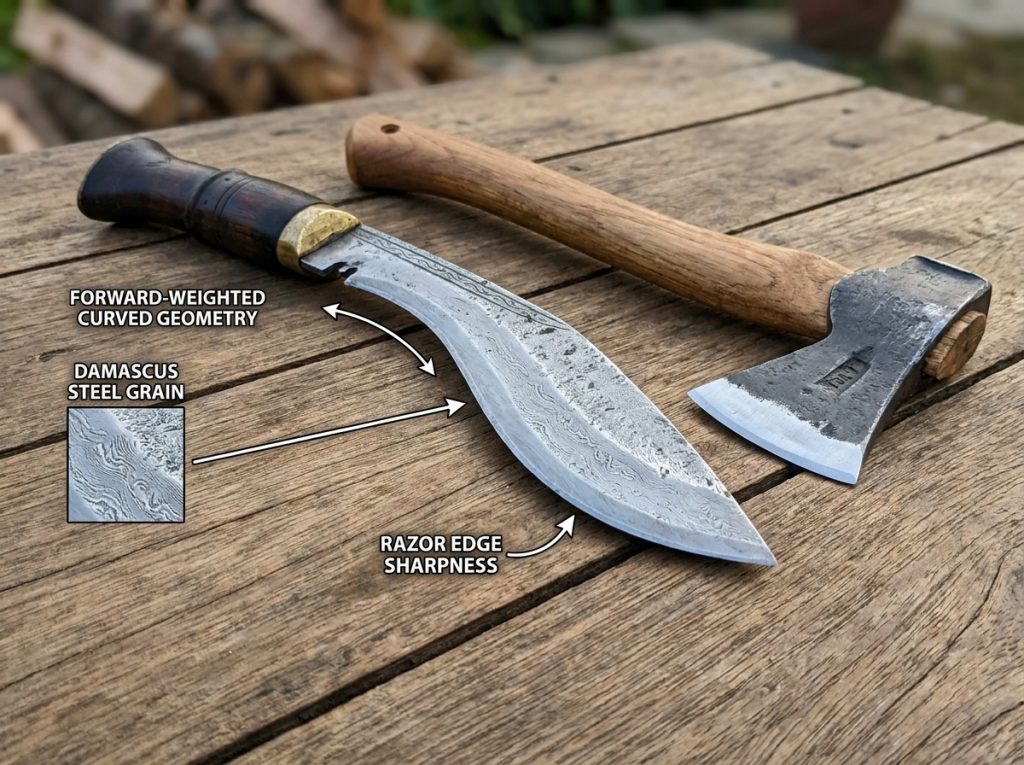
The Kukri’s curved blade does most of the work here. The weight sits toward the forward section of the blade, which means each swing carries more force — similar to the way an axe drives through wood. Blades typically run 10 to 15 inches, with the full knife measuring around 16 to 18 inches and weighing between 1 and 2 pounds.
A smaller Kukri is easier to carry and handles light tasks well. A larger one delivers more chopping power but gets tiring on long hikes. Most campers find the 10 to 12-inch range hits the sweet spot.
What Is a Bowie Knife?
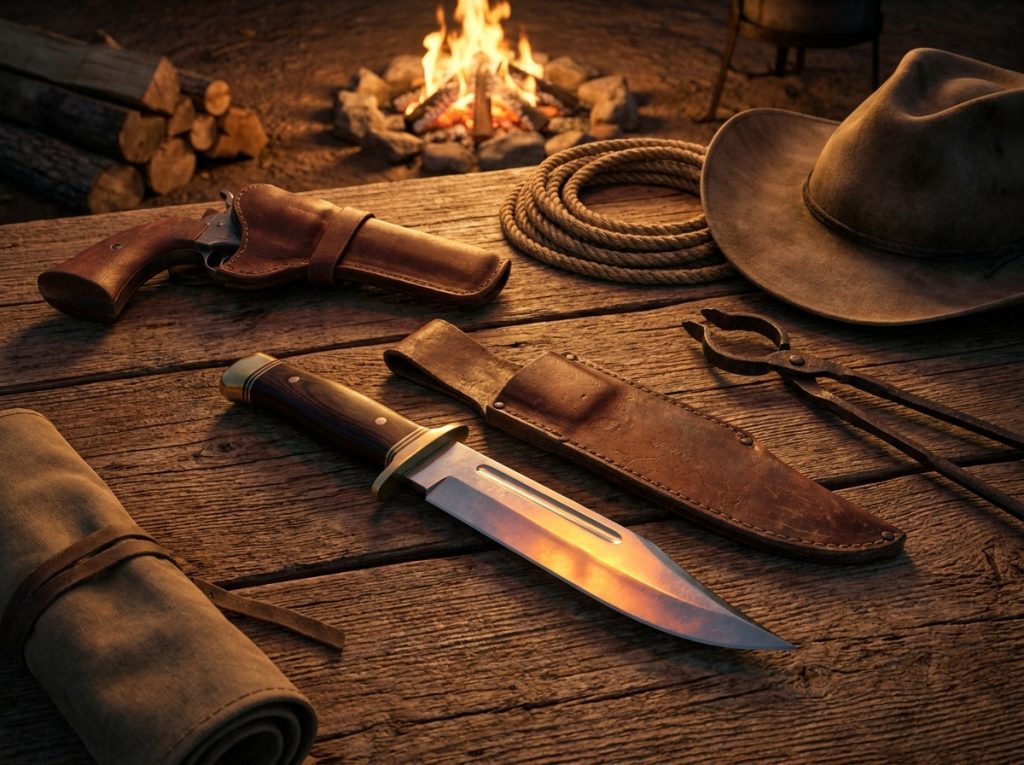
The Bowie knife is one of the defining tools of the American frontier. Named after Colonel Jim Bowie, it became famous after the Sandbar Fight of 1827 — a wild brawl on a Mississippi River sandbar where Bowie reportedly used a large fighting knife to survive being shot and stabbed by multiple attackers. His brother Rezin is often credited with designing the original blade, a wide, heavy knife based on a butcher’s pattern. After that incident, demand for “Bowie knives” spread across the American West.
Today, the term covers any large fixed-blade knife with a straight or slightly curved edge and a clip point — where the spine of the blade angles down toward a sharp, controllable tip.
Design and Dimensions
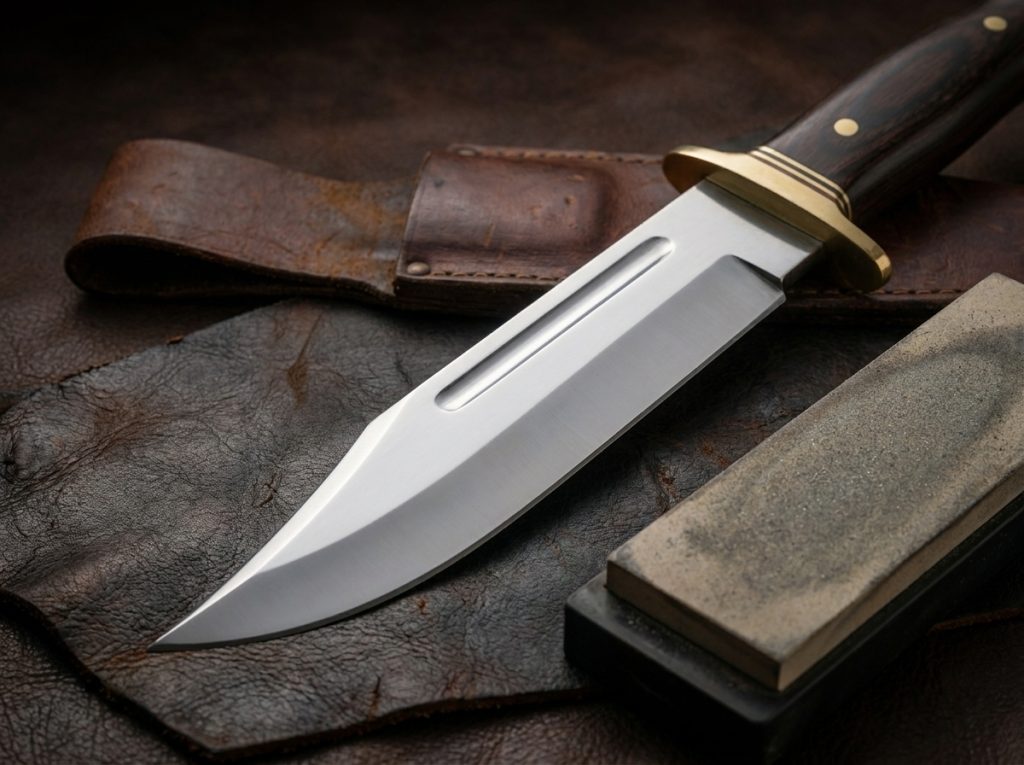
A standard Bowie features a blade between 8 and 12 inches, roughly 1.5 to 2 inches wide, with a thickness around a quarter inch. Most weigh between half a pound and a pound — noticeably lighter than a Kukri. The clip point is the defining feature: that angled back edge creates a sharp, precise tip that’s well-suited for piercing and controlled cuts. Most Bowie knives also include a hand guard, which keeps your fingers safe during heavy use.
Kukri vs Bowie: Head-to-Head
| Feature | Kukri Knife | Bowie Knife |
| Blade Shape | Curved, forward-heavy | Straight with clip point |
| Best For | Chopping, brush-clearing, shelter tasks | Slicing, skinning, piercing, hunting |
| Weight | 1–2 lbs | 0.5–1 lb |
| Blade Length | 10–15 inches | 8–12 inches |
| Ease of Use | Requires practice | Beginner-friendly |
| Hand Guard | Typically none | Usually included |
| Chopping Power | Excellent | Moderate |
| Slicing Precision | Moderate | Excellent |
Chopping Power
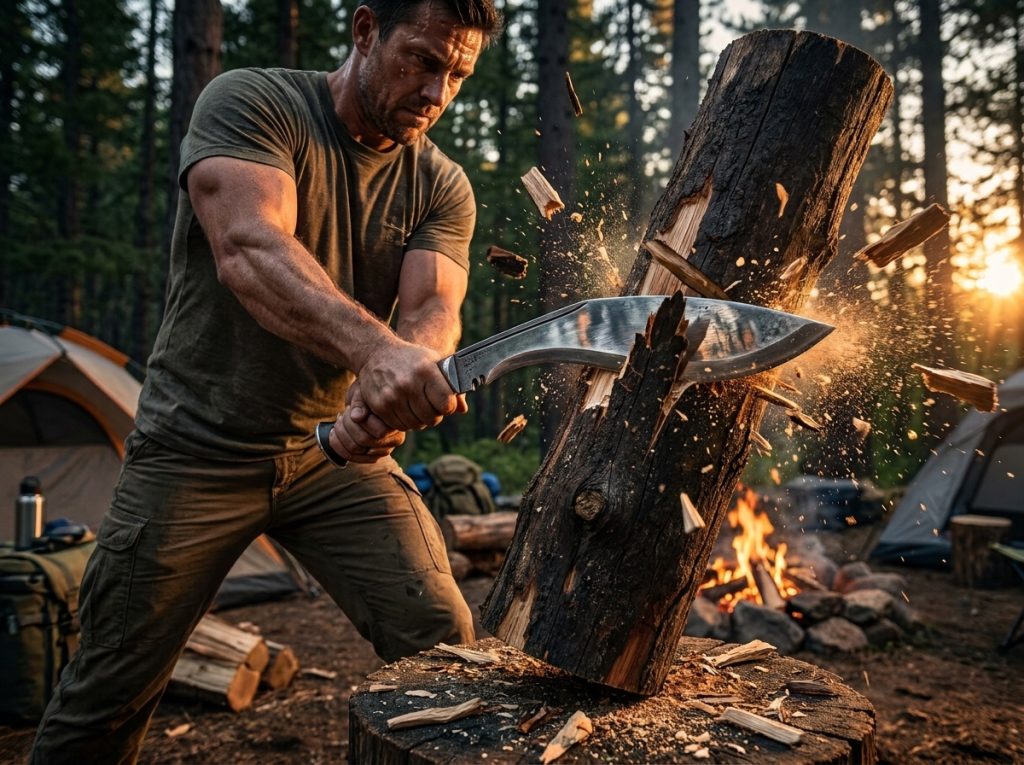
This is where the Kukri has no real competition. The forward-weighted blade concentrates force at the point of impact, so a single swing digs into wood far deeper than a straight blade of similar weight. Whether you’re splitting kindling, hacking through thick vines, or batoning logs for a shelter, the Kukri handles it with an efficiency that would take twice as many strokes with a Bowie.
The Bowie can handle small branches just fine — it’s not helpless in the woods. But using it for serious chopping is slow, tiring work. If heavy camp prep is a regular part of your trips, the Kukri is the better tool.
Slicing and Precision Cutting
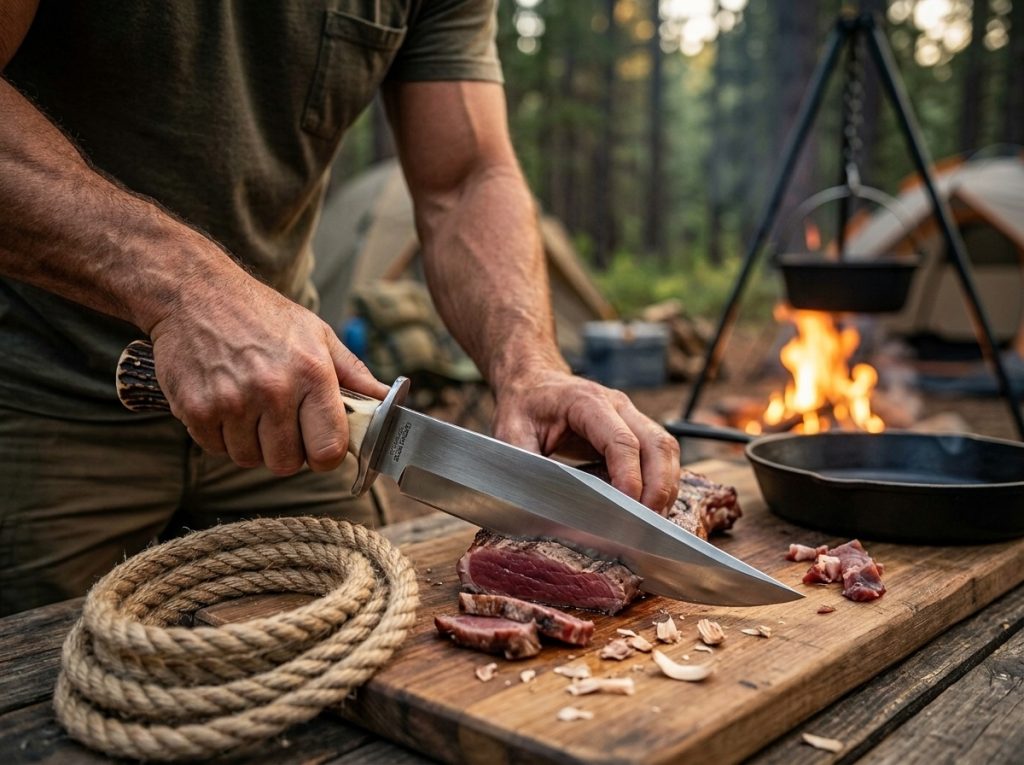
Here the Bowie takes the lead cleanly. Its straight edge draws through rope, meat, and cordage with smooth, controlled strokes. The clip point lets you start a cut precisely and steer it well, which makes a real difference when you’re processing game or doing detail work around camp.
The Kukri can slice — particularly when you draw it through brush or use the inner curve — but that same curve makes fine tasks awkward. Skinning an animal or trimming food with a Kukri takes more skill than doing it with a Bowie. Stabbing with a Kukri is also clumsy due to the blade geometry.
Weight and Carrying
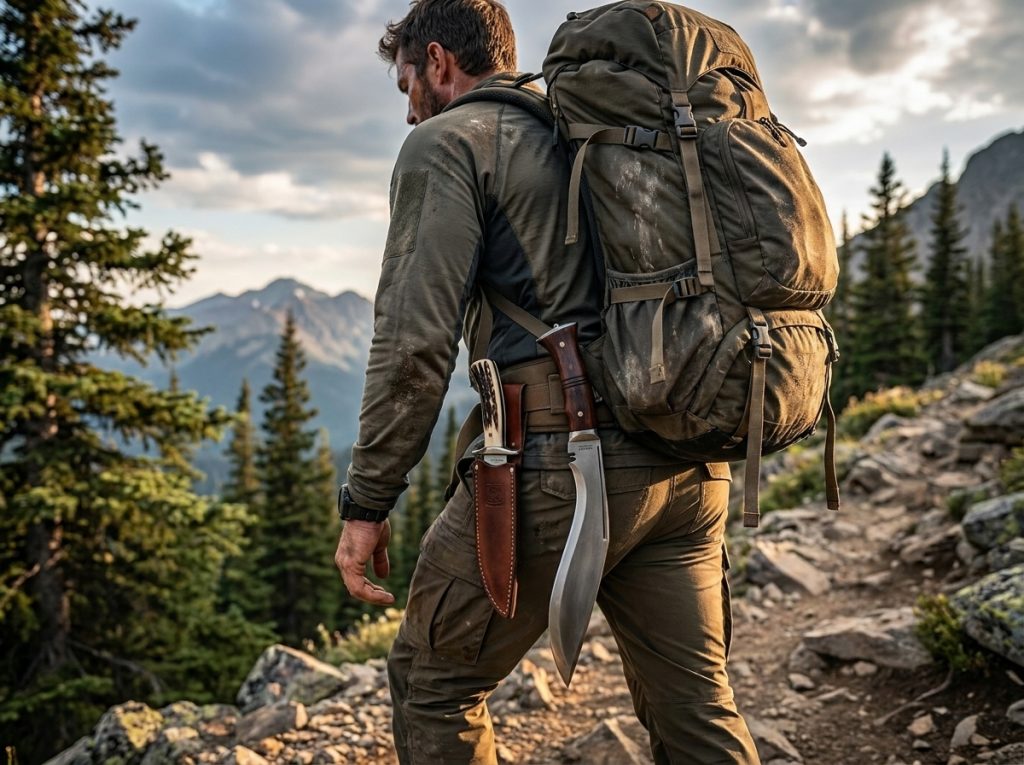
A Kukri feels like a controlled hatchet on your hip. That forward weight is an asset during chopping but becomes fatigue over a long day on the trail. It’s bulkier than a Bowie and takes up more real estate on your belt or pack.
A Bowie sits lighter and balances more evenly, making it easier to carry all day. Beginners especially notice how much more natural it feels in the hand — you’re not fighting the blade’s geometry to maintain control.
Durability and Steel
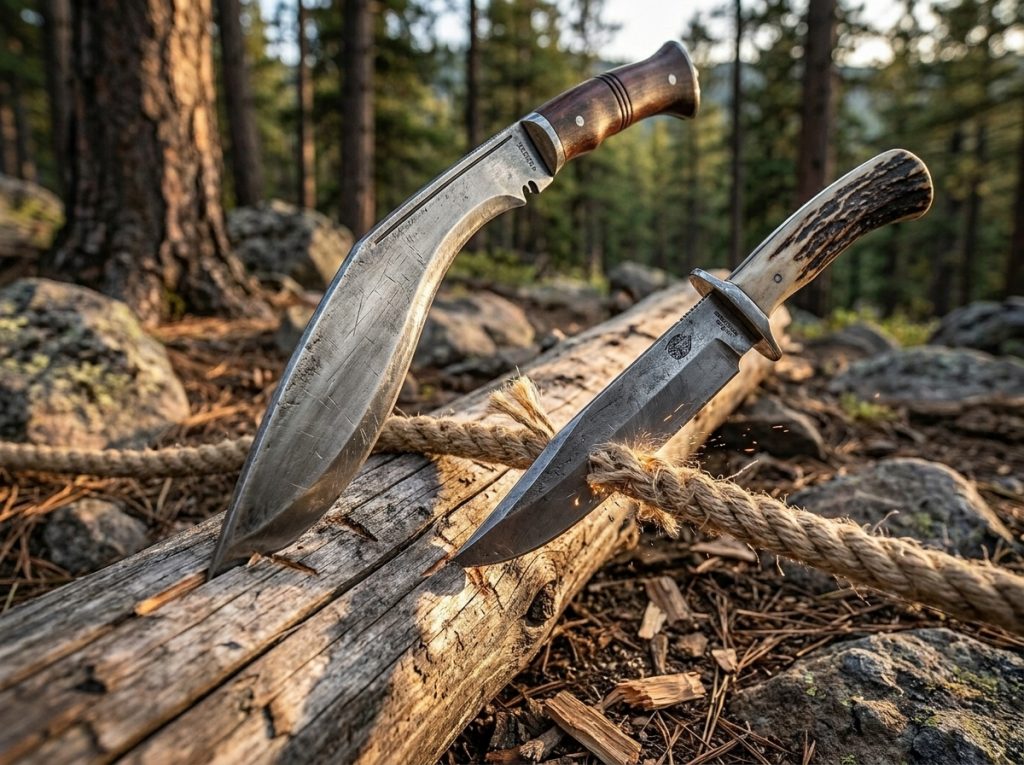
Both knives hold up well to outdoor use, but their strengths differ slightly. Kukris use thick high-carbon steel — 5160 and similar grades — that handles serious abuse without chipping. The thickness of the blade means you can drive it into hard material with confidence. Some higher-end Kukris use hollow-forged construction to reduce weight without sacrificing strength.
Bowie knives appear in both high-carbon and stainless steel versions. High-carbon holds a keener edge and is easier to sharpen in the field; stainless resists rust better in wet or coastal environments. The thinner tip of a Bowie can chip or bend if you use it for prying, which a Kukri shrugs off with no problem.
Sharpening and Maintenance
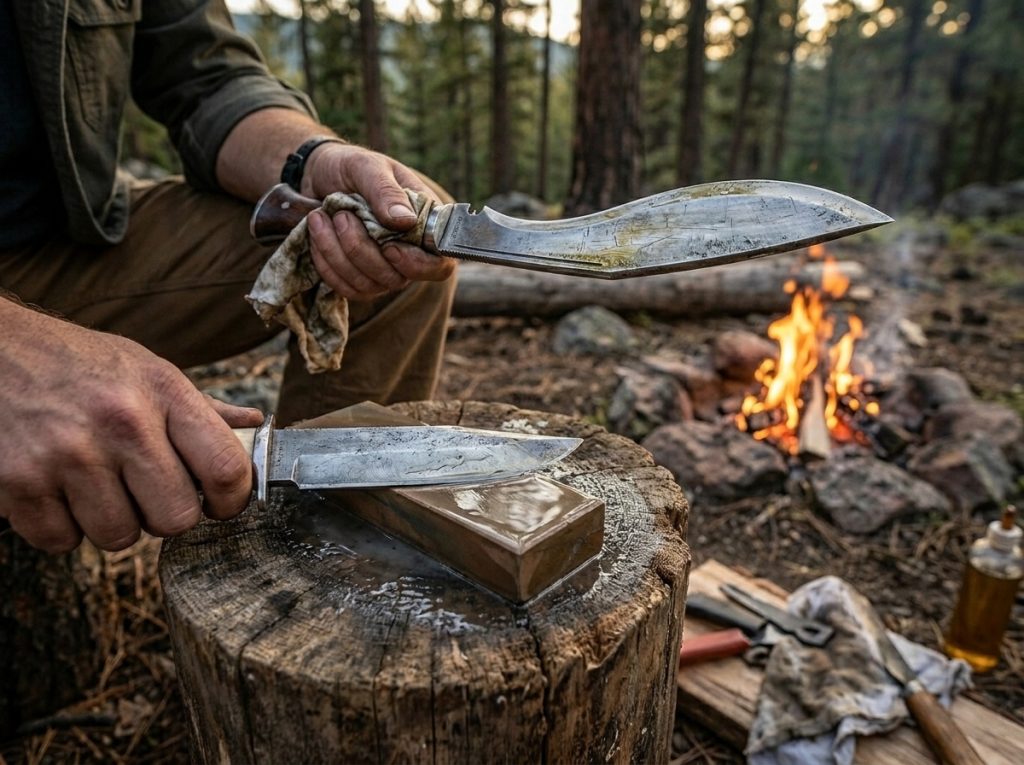
A Bowie is easier to sharpen — you run the blade across a whetstone at a consistent angle, and the straight edge responds quickly. A Kukri requires a curved sharpening motion that follows the blade’s profile, which takes some practice to get right. That said, once you learn it, maintaining a sharp Kukri edge is straightforward.
Both knives in high-carbon steel need a wipe-down and a light coat of oil after use, especially in wet conditions. Stainless steel Bowies are more forgiving but may need more passes on the whetstone to get a truly sharp edge.
Pros and Cons at a Glance
| Kukri | Bowie | |
| Pros | Outstanding chopping power Nearly indestructible blade Great for heavy survival tasks Versatile — axe and knife in one | Clean slicing and precise cuts Lighter and easier to carry Beginner-friendly with hand guard Superior for hunting and game prep |
| Cons | Heavy and bulky for long carries Not ideal for detail work or food prep No hand guard Requires practice to use well | Weaker for chopping and heavy work Tip can chip if misused for prying Needs regular sharpening Less effective in jungle/dense terrain |
Which Knife Is Right for You?
Go with the Kukri if…
- You camp in dense forest, jungle, or thick brush where clearing is constant work
- You need to process a lot of firewood on extended trips
- You want one tool that handles both axe work and general cutting
- You’re comfortable with a heavier, more powerful blade

Go with the Bowie if…
- You hunt regularly and need a clean, precise skinning and processing knife
- You backpack long distances where weight matters
- You’re newer to fixed blades and want something easy to control
- Your cutting tasks lean toward rope, food prep, and utility work rather than chopping
Carry Both
Plenty of serious outdoorsmen run both knives — the Kukri for camp setup, firewood, and heavy clearing, and the Bowie for hunting and food prep. If your trips involve both worlds, there’s no reason to choose.
What to Look for When Buying
Blade Steel
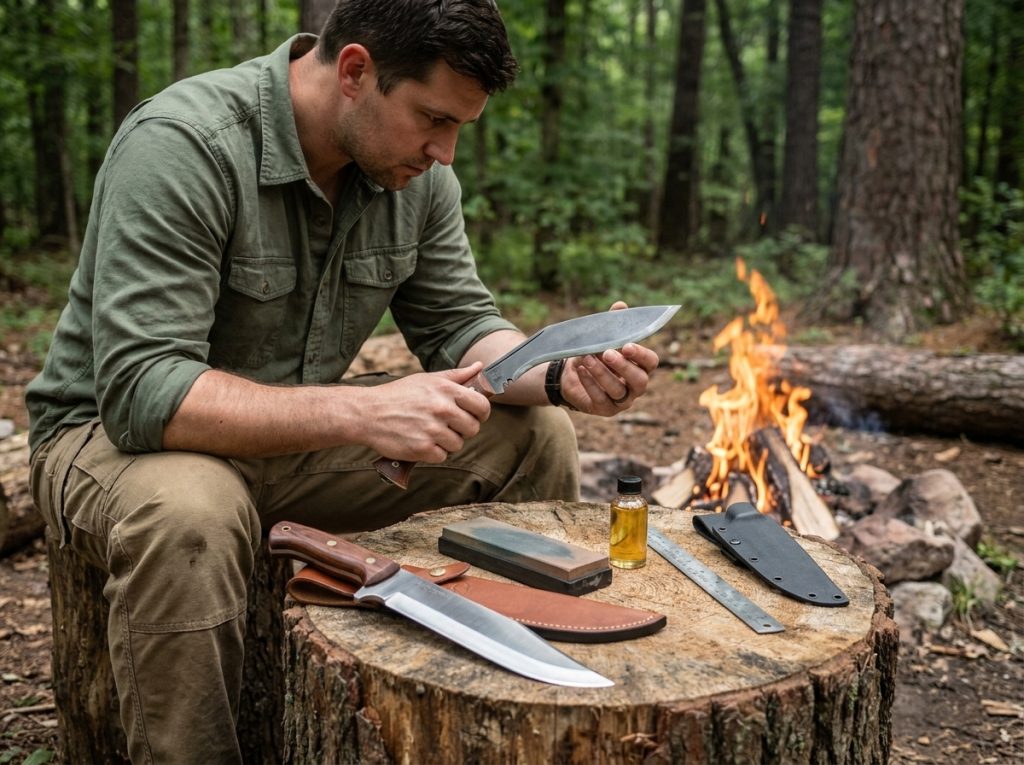
High-carbon steel (1095, 5160) holds a sharper edge and is easier to touch up with a field stone. It rusts if you neglect it, so wipe and oil after use. Stainless steel (440C, S30V) resists rust well and suits wet environments — useful if you frequently paddle, fish, or camp in rain-heavy areas.
Handle and Grip
Look for textured rubber, Micarta, or quality hardwood with a shaped grip. A handle that feels secure when wet is non-negotiable. For Kukris specifically, check that the grip is wide enough to get a full hand around — a narrow handle makes the heavier blade hard to control.
Sheath Quality
A loose sheath is a hazard. The blade should sit firm with no wobble. Leather sheaths are traditional and look great but need conditioning to stay supple. Nylon and Kydex are more maintenance-free and hold up better in wet conditions.
Size
For a Kukri, a 10 to 12-inch blade handles most camping tasks without being exhausting to swing. Go 14-plus inches only if heavy chopping is your main use. For a Bowie, 8 to 10 inches balances carry weight and function; 12-inch blades are for people who specifically want a larger all-purpose tool.
Price Range
Budget knives start around $20 to $50 and can be serviceable, but the sheath and handle quality often suffer. The $50 to $150 range is where most reliable camp and hunting knives live. Above that, you’re buying craftsmanship and heritage rather than practical gains for most users.
Recommended Picks
Kukri Knives
Cold Steel Gurkha Kukri Plus (~$120): A 12-inch high-carbon steel blade with a Kray-Ex handle that holds up to heavy use. The Secure-Ex sheath is one of the more reliable on the market. Solid choice for serious chopping work.
GK&CO Afghan Kukri (~$80): Handmade in Nepal with a 10-inch blade and wooden handle. A good mix of working tool and piece you’d actually want to display. Comes with a leather sheath.
Ontario OKC Kukri Machete (~$40): A budget-friendly 12-inch option in 1055 carbon steel with a rubber grip. Good starting point if you want to try a Kukri without committing to a premium price.
Bowie Knives
Ontario Hell’s Belle Bowie (~$60): An 8-inch high-carbon blade with a rubberised grip and a tough nylon sheath. Light enough to carry comfortably all day, sharp enough for hunting and camp tasks.
Cold Steel Leatherneck Bowie (~$100): A 12-inch stainless blade built for durability, with a Griv-Ex handle and a secure sheath. More knife than most people need, but built to last.

Buck 119 Special (~$70): A 6-inch 420HC stainless blade with a leather sheath. Not a full Bowie by the strictest definition, but it handles hunting and camp cutting tasks with excellent reliability.
Know Your Local Laws
Fixed-blade knives like the Kukri and Bowie fall under knife-carry regulations in many countries. In the UK, carrying a fixed blade in public without a legitimate reason (such as a camping trip or work requirement) is illegal. Folding knives under 3 inches with no locking mechanism are generally allowed. In the US and Canada, laws vary by state and province — some restrict blade length, others regulate open versus concealed carry. Check the rules where you live before purchasing or packing a fixed blade.
Final Thoughts
The Kukri wins on raw power — nothing in its size class chops and clears like it does. The Bowie wins on precision and versatility — it’s the cleaner, more beginner-friendly blade for hunting, food prep, and everyday camp tasks.
If your trips put you in dense terrain where you’re constantly clearing and building, the Kukri earns its weight. If you hunt, travel light, or want a knife you can handle confidently from day one, the Bowie is the smarter pick.
When in doubt — carry both.